As EV adoption accelerates, conversations around charging speeds, battery sizes, and charger power are becoming more common. But there’s one critical concept that often flies under the radar—despite having a huge impact on charging efficiency and cost.
That concept is C-rate.
It might sound technical, but understanding C-rate could save you money, improve customer satisfaction, and help you make smarter infrastructure decisions – especially if you’re a Charge Point Operator (CPO) or fleet manager.
So, What Exactly Is C-Rate?
C-rate isn’t just a number—it’s the invisible limit that determines how fast a vehicle can charge, regardless of what your charging station can deliver.
In other words, C-rate is a measure of how fast a battery can be charged or discharged relative to its total capacity. It tells you how many multiples of its capacity per hour the battery can accept or deliver.
Think of C-rate as the battery’s “speed limit.”
1C means a battery can charge from 0% to 100% in 1 hour
0.5C = full charge in 2 hours
2C = full charge in 30 minutes
Now, let’s look at a real-life example:
If an EV has a 100 kWh battery:
At 1C, it accepts 100 kW of power
At 0.5C, it accepts 50 kW
At 2C, it could technically accept 200 kW
But here’s the catch: most vehicles don’t charge at 1C consistently, and many limit charging below this threshold to protect battery health.
Why It Matters: The Misconception Around Charger Power
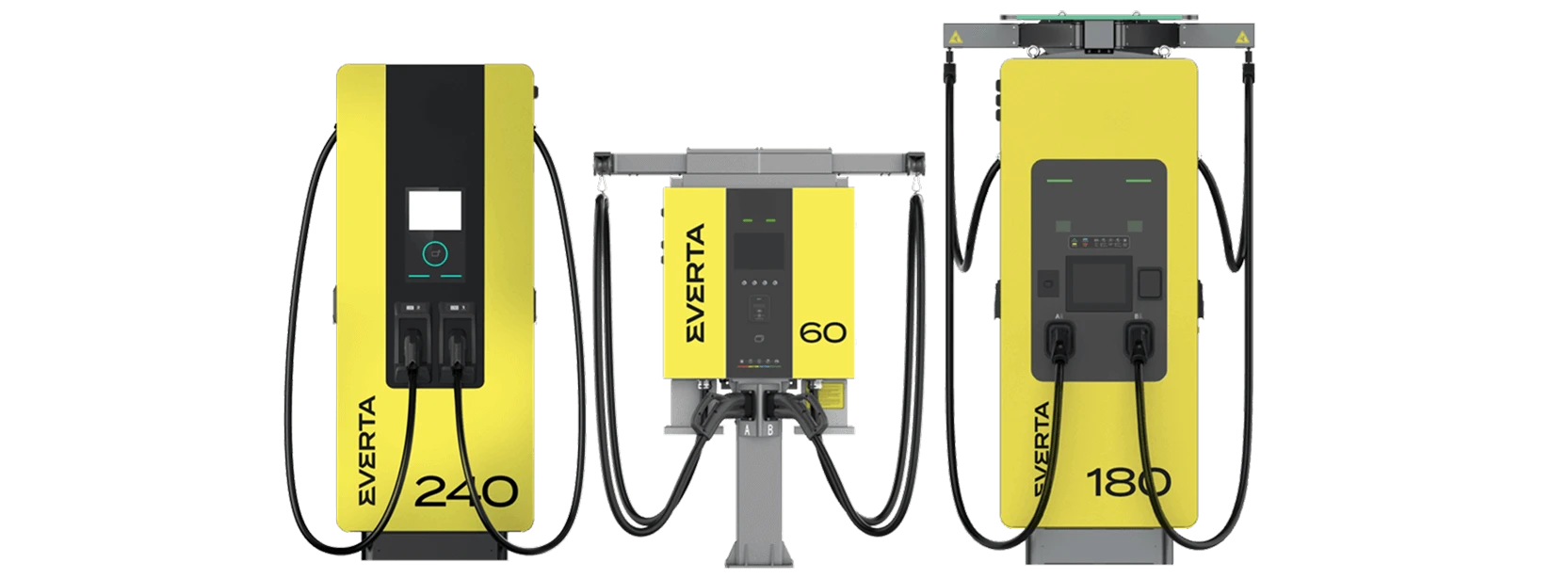
A common assumption is: “If I install a 240 kW charger, my EV will charge faster.” Not necessarily.
EVs only accept what they can handle – and that’s determined by their C-rate, not by the charger’s maximum output.
So, if your vehicle peaks at 100 kW, plugging it into a 240 kW charger won’t speed things up — the extra capacity simply goes unused.
What does that mean in practice? Installing a charger that’s too powerful for the vehicles it serves may lead to:
Higher capital investment than necessary
Underutilized infrastructure and idle energy capacity
Unmet expectations from drivers who associate bigger numbers with faster results
Why It Matters for CPOs and Fleet Operators
If you are a CPO:
Most EVs on your network draw only 50–100 kW
Installing ultra-fast chargers everywhere can hurt ROI
Understanding real-world C-rates helps right-size your infrastructure and avoid costly underutilization
If you are a Fleet Operator:
High C-rate = faster turnaround and better fleet uptime
Matching charger speed to vehicle C-rate protects both battery health and operational efficiency
Not All EVs Charge the Same
Not all electric vehicles are created equal – and that’s especially true when it comes to charging speeds.
Typical C-Rates Across Vehicle Types:
Vehicle Type
Typical Battery Size
Common C-Rate
Effective Charging Power
2- and 3-Wheelers
5–15 kWh
~1C
10–30 kW
City Passenger EVs
30–60 kWh
0.5–1C
30–60 kW
Long-Range Passenger EVs
60–100 kWh
1–1.5C
60–150 kW
eBuses and eTrucks
150–600 kWh
0.5–1C
150–300+ kW
The Risks of Ignoring C-Rate
Overbuilding: A 240kW charger serving 50kW EVs = wasted capacity and money.
Customer frustration: Slow charging despite high-power stations hurts user satisfaction.
Battery damage: Charging beyond C-rate leads to heat buildup, faster degradation, and costly downtime.
C-rate in Real Business Terms
Let’s say you manage a delivery fleet with vans using 60 kWh batteries, each supporting a 1C charge rate (so they draw 60 kW).
You install 180 kW chargers to speed things up. Sounds great – until you realize your vans only use a third of that capacity.
A better approach?
Deploy modular 60–90 kW chargers
Save on hardware and energy costs
Upgrade later as vehicle technology improves
Strategic Tips
For CPOs:
Map your vehicle user base.
Prioritize actual draw over theoretical max
Use load balancing and modular chargers to scale smartly.
For Fleet Operators:
Match charger speed to fleet C-rates
Use overnight slow charging for base loads
Reserve fast charging for opportunity charging, just above vehicle limits.
So, When Do High-Power Chargers (180kW, 240kW, 320kW) Make Sense?
While C-rate tells us that most EVs can’t take full advantage of ultra-high charging power today, there are clear scenarios where installing 180kW+ chargers is a smart move — if the vehicles and context support it.
When you’re serving long-range commercial vehicles Heavy-duty e-trucks and buses with large batteries (300–600kWh) often support higher C-rates and require rapid turnaround — especially on intercity routes or during opportunity charging windows.
When dwell time is short, and uptime is critical In highway corridors or high-volume urban hubs, where users expect 15–30 minute sessions, faster charging minimizes wait times and keeps operations moving.
When you’re planning for the future Vehicle capabilities are evolving fast. Even if most current EVs draw only 60–150kW, newer models — especially in fleets — are starting to support 200kW+ intake. Future-proofing with modular or scalable high-power units can pay off.
When your site can actually support it Ultra-fast chargers make sense only if the grid infrastructure (or battery storage) can handle the load. Without this, high-power investment may lead to downtime, throttling, or costly upgrades.
Install high-power chargers where they match vehicle C-rates, use case urgency, and site readiness. Otherwise, it’s smarter to right-size your solution and scale when the time is right.
Key Takeaways
C-rate = the real charging speed your battery supports
Vehicles won’t accept more power than their C-rate allows
More charger power ≠ faster charging or better ROI
Smart infrastructure is right-sized and future-ready
Planning for the Future
Battery technologies are improving fast. In the coming years, you’ll see 2C, even 3C charge rates, especially in commercial EVs. But for now, your best strategy is:
Install modular DC chargers
Prioritize scalability
Integrate OCPP backend systems for flexible upgrades
Whether you run a public network or manage a private fleet – C-rate should guide your decisions.
____________________________________
At Everta, we believe smart charging is better than fast charging. We work with CPOs and fleet operators to design charging systems that match what vehicles can actually use – not just what looks powerful on paper.
Because building the future of EV charging isn’t about overbuilding. It’s about building with purpose, precision, and long-term vision.
Want to talk about finding the right charger for your network or fleet? Let’s talk.